Moisture Beneath Your Feet: How High Crawl Space Humidity Invites Pests into Birmingham Homes
High humidity beneath your home creates an ideal breeding ground for termites, rodents, and moisture-loving insects. Learn how crawl space moisture impacts Birmingham properties and how to stop it.
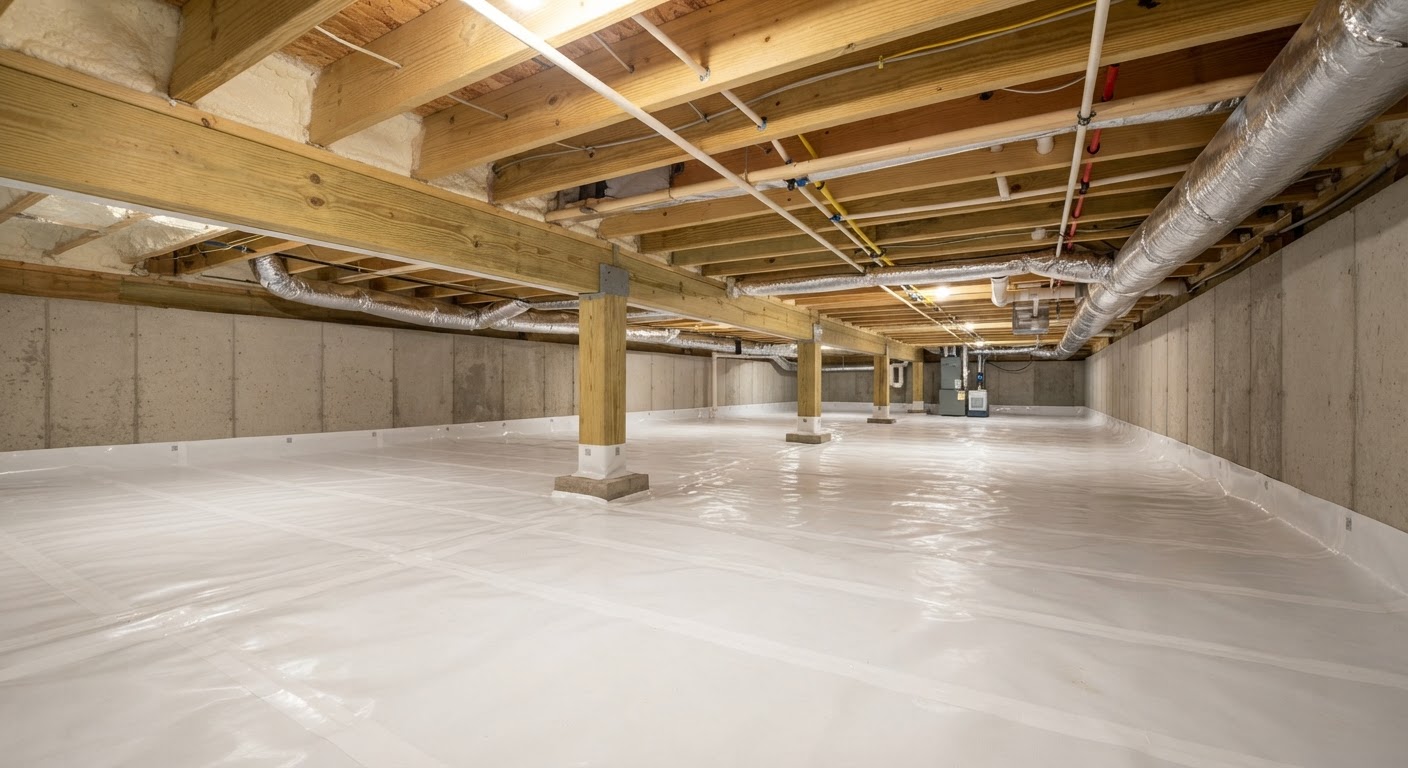
The Hidden Climate Beneath Birmingham Homes
In Birmingham, the climate is known for its extended, muggy summers and substantial rainfall throughout the year. While homeowners invest significant time and resources into managing indoor comfort and landscape aesthetics, the space directly beneath the floorboards is frequently overlooked. Crawl spaces serve a structural purpose, housing plumbing lines, electrical wiring, and ductwork, but they also act as an interface between the damp earth and the conditioned living space above.
Central Alabama’s native soil composition—often rich in dense red clay—retains water long after a heavy rain. When moisture seeps into the ground around a foundation, crawl spaces can quickly become trapped reservoirs of warm, stagnant, humid air. When relative humidity in a crawl space consistently surpasses 60 to 70 percent, it shifts from an unconditioned structural cavity into an ideal ecosystem for biological growth and invasive household pests.
The Physics of Crawl Space Humidity and the Stack Effect
Historically, building codes across the South mandated passive foundation vents under the assumption that outside breezes would carry humid air away from the home. In Birmingham’s summer climate, however, ambient air often carries relative humidity levels between 80 and 90 percent. When this hot, saturated air enters a cooler crawl space, it cools down quickly. Cooler air cannot hold as much moisture as warm air, leading to condensation on joists, subflooring, ductwork, and foundation walls.
This moisture does not simply stay under the house. Modern building science demonstrates the 'stack effect,' a process where warm air rises through the living areas of a home and escapes through the attic. As this air exits, it creates negative pressure at the base of the structure, pulling air—along with moisture, mold spores, and airborne insect debris—upward from the crawl space into living rooms, kitchens, and bedrooms. When pests colonize the damp zone below, they quickly find passageways into the rest of the residence.
Pests That Thrive in Humid Birmingham Crawl Spaces
Excess moisture under a home provides pests with their two most fundamental survival requirements: water and sheltered harborage. When relative humidity remains elevated, it alters the structural wood, softening it and making it easier for wood-destroying organisms to establish colonies.
1. Subterranean Termites
Subterranean termites are the most financially destructive insect pest in Alabama. These social insects live in large underground colonies and require continuous access to moisture to prevent their thin exoskeletons from drying out. A dry crawl space forces subterranean termites to expend substantial energy constructing protective mud shelter tubes over foundation footers to reach framing timbers.
Conversely, a crawl space plagued by standing puddles, damp soil, or sweating pipes provides subterranean termites with continuous hydration directly at the food source. When subflooring and rim joists absorb ambient moisture, the wood becomes soft and easier to consume. In high-humidity conditions, subterranean termites can thrive and cause severe structural damage with minimal exposure to the elements.
2. Wood-Boring Beetles
Powderpost beetles and other wood-boring species target structural lumber with elevated moisture content. Female beetles lay eggs in the pores and cracks of unfinished, damp wood joists. Once the larvae hatch, they bore into the interior of the timber, feeding on the cellulose and starches for months or even years. As they emerge as adults, they leave behind tiny pinholes and a fine, powdery frass resembling sawdust. If a crawl space maintains high humidity, structural framing remains permanently susceptible to continuous re-infestation by these beetles.
3. Camel Crickets and Silverfish
Commonly referred to as cave crickets or 'sprickets,' camel crickets seek out dark, cool, highly humid environments. While they do not consume structural framing, their presence signals excessive dampness. Large populations of camel crickets beneath a home often draw secondary predators, such as spiders, into the subfloor. Similarly, silverfish thrive in damp, undisturbed pockets, feeding on microscopic molds, fungal residues, and damp paper backings on fiberglass floor insulation.
4. Cockroaches
Species such as the American cockroach and the Oriental cockroach are heavily reliant on water. In nature, they inhabit rotting logs, leaf piles, and riverbanks. In suburban Birmingham neighborhoods, a damp crawl space offers the exact same environment. Cockroaches feed on decaying organic debris under the house, breed in damp insulation, and inevitably travel along utility pipes into bathrooms and kitchens.
5. Rodents (Rats and Mice)
Rodents need a consistent water source and sheltered nesting areas to maintain breeding populations. A humid crawl space with dripping pipes or condensation provides easy hydration. Additionally, moisture causes standard fiberglass batt insulation to absorb water, grow heavy, and pull away from the subfloor. These fallen insulation batts create warm, concealed nesting cavities for Norway rats, roof rats, and house mice. Rodents also gnaw through crawl space vapor barriers, ductwork, and wiring, compounding structural hazards.
Warning Signs of a Moisture and Pest Problem
Because homeowners rarely inspect their crawl spaces regularly, moisture-driven pest problems can develop unnoticed for months. Several warning signs inside the living area often indicate that the environment below needs attention:
- Musty or earthy smells: Foul odors circulating through the home often originate from fungal growth and pest waste drawn upward by the stack effect.
- Warped or cupping hardwood floors: High humidity beneath the subfloor causes wood planks to swell and buckle along their edges.
- Spongy or bouncy floorboards: When joists absorb moisture and suffer termite or wood-rot damage, they lose structural integrity, leading to soft spots underfoot.
- Sagging or fallen insulation: Fiberglass insulation that has absorbed water will tear free from its fasteners and hang down toward the soil.
- Visible insect activity along baseboards: Frequent sightings of camel crickets, silverfish, or cockroaches in ground-floor rooms often indicate an active population below.
Steps to Reduce Moisture and Deter Crawl Space Pests
Controlling crawl space pests requires addressing the moisture that invites them in the first place. Chemical treatments alone cannot completely solve a pest problem if the underlying conditions continue to provide an ideal habitat. Homeowners should take several proactive steps to stabilize the crawl space environment:
- Manage exterior drainage: Ensure that gutters and downspouts are clear and discharge water at least five to ten feet away from the foundation. The soil surrounding the home should slope gently downward away from the exterior walls.
- Install a heavy-duty vapor barrier: Bare dirt floors continuously release gallons of water vapor into the air. A durable, puncture-resistant polyethylene vapor barrier installed across the crawl space floor helps block ground moisture from evaporating into the joists.
- Repair plumbing and condensation leaks: Air conditioning condensate lines, outdoor hose bibbs, and interior plumbing routed through the crawl space should be inspected regularly for slow drips or condensation.
- Clear organic debris: Scrap lumber, cardboard boxes, and dead leaves left in a crawl space serve as primary food sources for termites and harborage for pests. The space should remain clean and clear.
- Schedule regular professional inspections: Having pest professionals inspect the subfloor allows for early detection of hidden subterranean termite tubes, wood decay, and rodent harborage before structural damage becomes severe.
Protect Your Birmingham Home from the Ground Up
A healthy home depends on a stable, dry foundation. When relative humidity in your crawl space goes unchecked, it compromises structural timbers and invites wood-destroying pests, nuisance insects, and rodents directly into your home. Alder Crest Pest Control provides comprehensive residential pest control, termite defense, and rodent management tailored to the unique climate challenges of the Birmingham area. Contact Alder Crest Pest Control today to schedule an inspection and safeguard your property against moisture-driven pests.
Need help from Alder Crest Pest Control?
Contact our team to discuss your service needs in Birmingham and surrounding service areas.