Diverting the Drip: How HVAC Condensate Runoff Fuels Pests Along Birmingham Foundations
Air conditioning systems produce gallons of condensate daily during hot Alabama summers. Learn how improper drainage creates foundation moisture traps that invite termites, roaches, and other pests.
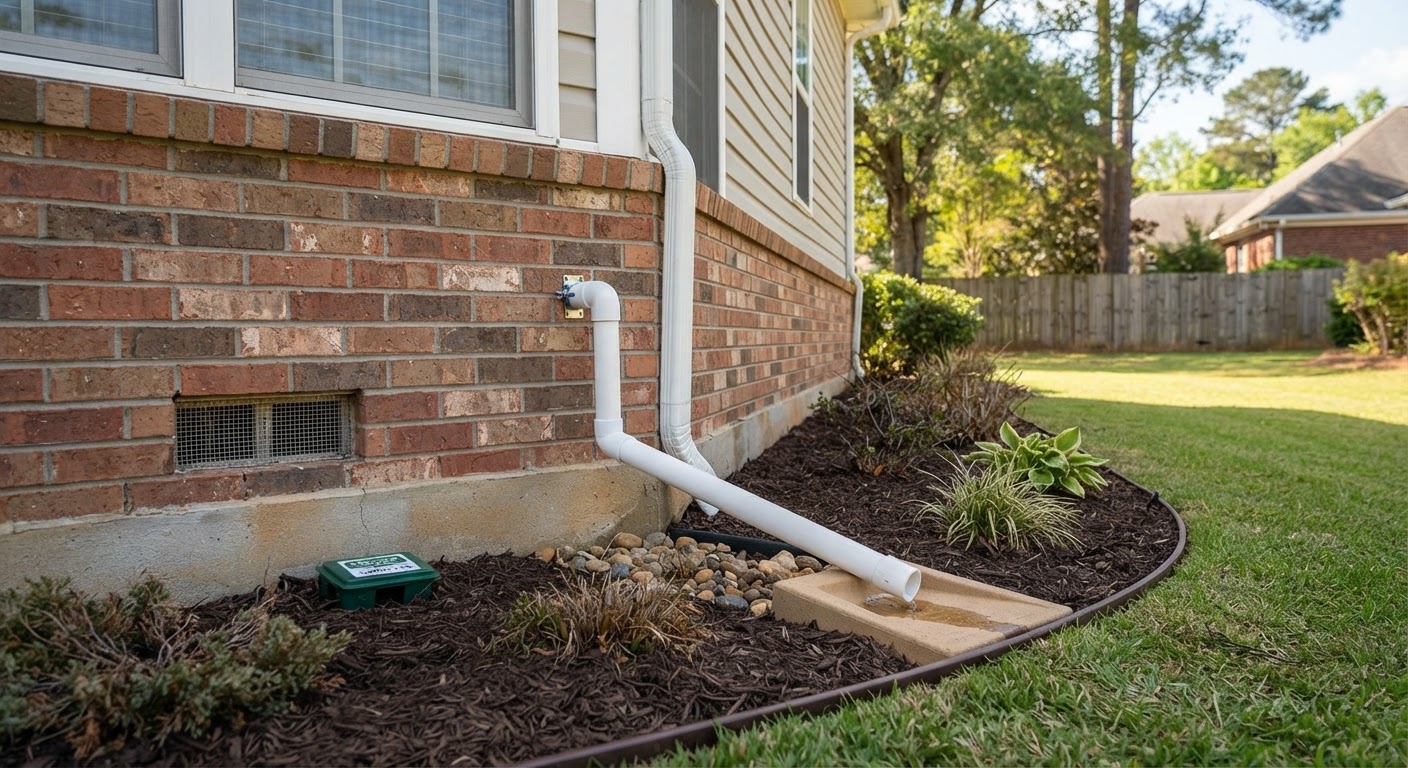
The Hidden Water Source on Your Perimeter
During a typical Birmingham summer, high humidity and climbing temperatures force air conditioning units to run almost continuously. While most homeowners appreciate the crisp indoor air, few consider where all that extracted humidity goes. As an evaporator coil pulls moisture out of the warm interior air, it condenses into water and flows out through a dedicated drainage pipe. On an average humid afternoon, a residential cooling system can easily produce multiple gallons of water each day.
In many homes across Central Alabama, this condensate line is simply a small white PVC pipe that terminates just inches outside the exterior wall, dumping continuous drips directly against the foundation footing or into adjacent landscape beds. What seems like a harmless trickle creates a localized, non-stop water source. Over weeks and months of summer operation, this discharge turns the surrounding soil into a perpetual moisture trap that serves as an open invitation to destructive and nuisance pests.
Why Foundation Moisture Traps Form in Central Alabama Soils
The geography and soil composition around Birmingham play a substantial role in how foundation moisture behaves. Much of the region sits atop dense red clay, which has very slow percolation rates compared to sandy or loamy soils. When water drips continuously in one spot, clay soil quickly saturates. Rather than draining freely downward, excess water tends to pool on the surface or seep horizontally toward porous foundation blocks, concrete slabs, and crawl space stem walls.
When an air conditioner drains directly beside the wall, it prevents the perimeter soil from ever drying out. Shaded by exterior siding, HVAC compressor units, or dense foundation shrubbery, these zones stay damp around the clock. This creates a specialized microclimate with elevated relative humidity, soft earth, and decaying organic matter—the exact recipe required for subterranean pests to establish thriving colonies right next to your home's structural framing.
Pests That Thrive on Condensate Accumulation
Insects and rodents require three basic elements to survive: food, harborage, and water. In the heat of summer, natural water sources can become scarce, making an active HVAC drain one of the most reliable and attractive hydration points on your property.
Subterranean Termites
Subterranean termites require continuous access to moisture to prevent their soft bodies from desiccating. They nest in the ground and build mud shelter tubes over exposed masonry to reach structural wood. When an HVAC line continuously soaks the foundation, it provides the damp soil conditions termites need to tunnel comfortably near your home. Furthermore, persistent moisture softens the ground, making it easier for foraging worker termites to explore foundation cracks, brick veneer ledges, and weep holes.
Cockroaches
Species such as Smokybrown and American cockroaches are notoriously dependent on damp environments. In Alabama, these large roaches frequently harbor in moist pine straw, leaf litter, and mulch surrounding home foundations. An HVAC condensate pipe emptying into mulch creates an ideal staging area. As roach populations expand in the damp perimeter bedding, their proximity to expansion joints, doors, and foundation vents dramatically increases the likelihood that they will migrate indoors.
Occasional Invaders: Millipedes, Centipedes, and Pillbugs
Creatures like centipedes, millipedes, earwigs, and pillbugs cannot tolerate dry conditions. They congregate wherever soil moisture remains high. When condensate keeps the foundation damp, populations of these perimeter pests can surge into the thousands. Once heavy summer downpours saturate the area completely or early autumn cools the soil, these pests often move upward and enter living spaces through gaps beneath exterior doors and thresholds.
Rodents
Mice and rats need water daily, especially during warm weather. A steady drip beneath an HVAC unit provides a dependable drinking fountain. Additionally, saturated soil around foundation edges makes it significantly easier for rodents to burrow beneath footings, concrete patios, and air conditioning condenser pads to establish nesting sites.
How Excess Drainage Weakens Pest Barriers
Beyond actively attracting pests, persistent condensate discharge can compromise your home's chemical and physical defenses. Many modern pest and termite management strategies rely on treating the soil along the exterior perimeter with protective materials.
When a pipe dumps concentrated water into the exact zone where soil treatments are applied, several problems can occur:
- Erosion of Protective Soil: The steady mechanical dripping and pooling can wash away treated topsoil, creating unmanaged gaps along the foundation perimeter.
- Waterlogging: Saturated conditions can alter soil chemistry and dilute water-soluble materials faster than normal weathering would.
- Bypass Pathways: Termites can use damp mud tubing built directly through saturated pockets to bypass treated zones that would otherwise deter their entry.
- Structural Settling: Chronic water pooling can cause ground settling beneath equipment pads and concrete walkways, opening new stress cracks in masonry that pests easily exploit.
Practical Steps to Correct Condensate Drainage
Remediating an HVAC drainage issue is generally straightforward and yields immediate improvements for both structural integrity and pest prevention. Homeowners can implement several practical fixes:
- Extend the Discharge Line: Attach an extension to the existing PVC drain line so that water discharges at least five to ten feet away from the foundation wall. Direct the water toward a downhill slope or garden bed that drains away from the house.
- Install a Splash Block or Catch Basin: If a long pipe extension is impractical due to foot traffic or landscaping, route the line onto a concrete splash block that carries water away, or tie it into an underground French drain or solid catch-basin line.
- Clear Away Heavy Mulch: Avoid piling thick layers of hardwood mulch or pine straw directly underneath condensate discharge points. Heavy ground cover traps moisture and prevents natural evaporation.
- Maintain Airflow Around the Compressor: Trim back shrubs, ornamental grasses, and weeds around your outdoor HVAC unit and drain pipe to allow sunlight and airflow to dry out damp soil between cycles.
- Inspect Secondary Drains: Ensure that your HVAC secondary (overflow) drain line—often visible higher up on the exterior wall or near an eave—is dry. A dripping secondary line indicates that the primary line is clogged inside, which could be causing water damage within your attic or crawl space.
A Balanced Approach to Perimeter Protection
Managing water runoff around your home is one of the most effective non-chemical pest prevention tactics available. By eliminating artificial moisture traps created by HVAC drainage, you make the perimeter of your house far less hospitable to subterranean termites, roaches, and crawling pests.
When combined with routine perimeter pest management and comprehensive termite inspections, proper water management ensures your home stays dry, sound, and secure against Central Alabama's most persistent pests throughout the cooling season.
If you have noticed pooling water, pest activity, or soft ground near your exterior foundation, reach out to Alder Crest Pest Control in Birmingham to schedule a thorough perimeter inspection and protect your home.
Need help from Alder Crest Pest Control?
Contact our team to discuss your service needs in Birmingham and surrounding service areas.