Flooded Out: Why Heavy Alabama Rains Drive Fire Ants and Roaches Indoors
Torrential Alabama downpours quickly saturate our dense soils, forcing outdoor pests to flee for their lives. Learn why heavy rain sends fire ants and large cockroaches straight into your living spaces.
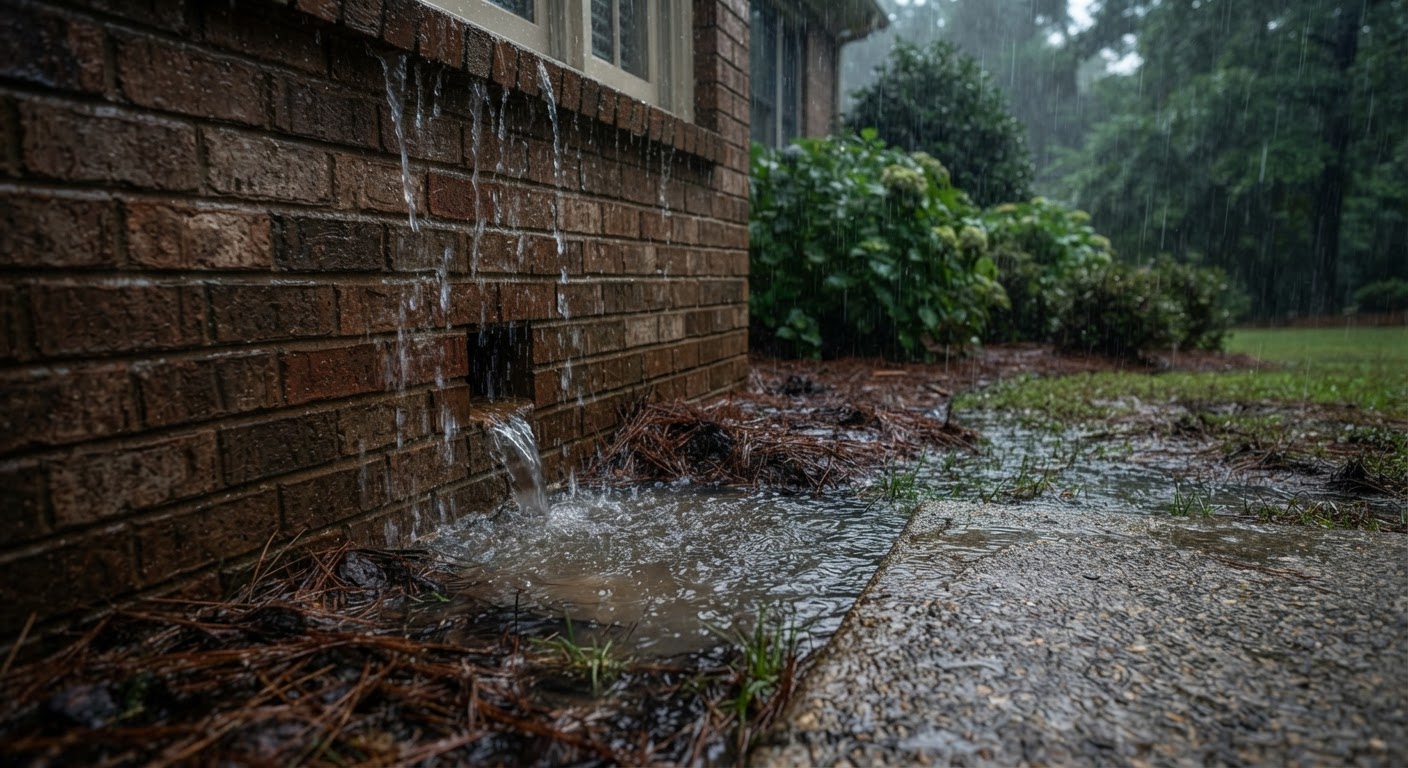
When the Skies Open, Pests Start Moving
Central Alabama is no stranger to sudden, torrential downpours. From heavy spring storm fronts to stalled summer afternoon cloudbursts fed by Gulf moisture, Birmingham regularly receives intense deluges that drop several inches of rain in a matter of hours. While homeowners usually check their gutters, monitor rooflines, and watch for yard pooling during these storms, an invisible migration is often occurring right under their feet.
For insects living in the soil, in leaf litter, or beneath landscape features, a severe storm is not just an inconvenience—it is a catastrophic flooding event. When their underground tunnels fill with water and their natural shelters wash away, pests are forced to evacuate immediately. Unfortunately for local homeowners, the closest high, dry ground is almost always the foundation of a house. Two pests in particular lead this indoor invasion after significant weather events: imported fire ants and large outdoor cockroaches.
The Soil Factor: How Birmingham's Red Clay Accelerates Invasions
To understand why heavy rain causes such an aggressive pest surge in Birmingham, it helps to examine the soil beneath our lawns. Much of the region is characterized by dense, tightly packed red clay. While this clay holds essential minerals, it has an exceptionally slow percolation rate. When a typical afternoon storm dumps two inches of rain over the Cahaba River basin or surrounding ridges, the ground cannot absorb the water fast enough.
Within minutes of a storm starting, the top layers of soil become completely waterlogged. The moisture backs up, filling every subterranean pocket, air void, and insect tunnel. Pests that rely on subterranean nests face drowning if they stay put. In sandy soils, water drains rapidly down through the soil profile, but in Alabama clay, water pools across the surface and flows toward structural foundations, carrying displaced pests right to your perimeter walls.
Fire Ants on the Move: Survival Instincts Trigger Indoor Raiding
Red imported fire ants are notorious for their aggressive foraging and painful stings, but they are also exceptionally resilient survivors. In a standard outdoor environment, fire ants construct elaborate, multi-tiered tunnel systems that can extend several feet into the ground. When a slow, gentle rain falls, worker ants simply move the queen and brood to deeper chambers. But when heavy downpours hit, these underground networks flood within minutes.
Rafting and Vertical Evacuation
Fire ants possess an extraordinary survival behavior known as rafting. When rising groundwater breaches their mounds, the ants hook their legs and jaws together, creating a living, waterproof raft made entirely of their own bodies. The queen, eggs, and larvae are safely placed in the center of this floating mass. This raft drifts on surface water until it strikes solid ground or an elevated structure.
When these rafts or saturated foraging trails hit a residential foundation, the ants begin climbing upward. In search of warmth and dry ground, they move through tiny structural gaps:
- Weep holes in exterior brick veneers
- Expansion joints between concrete driveway slabs and the foundation
- Crevices around air conditioning conduit lines and outdoor hose bibs
- Gaps beneath exterior door thresholds and garage door seals
Why Fire Ants Settle Inside
Once inside, fire ants do not immediately turn around and walk back out after the rain stops. If the outdoor mound has collapsed or remains submerged, the colony looks for temporary or permanent nesting sites indoors. They frequently colonize wall voids, gather behind baseboards, take shelter in bathroom plumbing access panels, or even establish secondary mounds beneath wall-to-wall carpeting. They are also notoriously attracted to electrical currents, frequently packing into air handler units, outdoor breaker panels, and electrical outlets, which can trigger short circuits and costly appliance repairs.
Cockroaches Seeking Dry Ground: The Displacement of Outdoor Roaches
In Alabama, the roaches that appear inside after heavy storms are often not the small German cockroaches associated with kitchen infestations, but rather large "outdoor" species: the Smokybrown cockroach and the American cockroach (often colloquially referred to as waterbugs or palmetto bugs).
Under normal circumstances, these species prefer high-moisture outdoor microclimates. Smokybrown roaches thrive in tree hollows, deep pine straw, mulch beds, and cluttered gutters. American roaches live in municipal sewer systems, storm drains, compost piles, and crawl spaces. While they need moisture to survive, they cannot breathe underwater.
Sewer Inundation and Drainage Backflow
When municipal storm sewers and neighborhood drainage ditches swell during a storm, the subterranean habitats of American roaches are completely submerged. To avoid drowning, roaches scurry upward in massive numbers through drainage pipes, drain lines, and crawl space vents. In older neighborhoods, rising water in storm lines can literally push them out through floor drains, basement sumps, or ground-level plumbing fixtures.
Evacuation from Landscaping and Gutters
Smokybrown roaches living in residential yards face a similar crisis. Thick beds of pine straw and hardwood mulch, popular in Birmingham landscaping, turn into floating sponges during a torrential storm. Displaced roaches scramble toward vertical surfaces—primarily trees and the exterior siding of homes. Because Smokybrown roaches are strong fliers and agile climbers, they travel straight up exterior walls to enter homes through:
- Unscreened soffit vents and attic gable vents
- Gaps beneath fascia boards and roof eaves
- Spaces around chimney flashing and roof vents
- Damaged or loose weatherstripping around upper-story windows
Once inside the attic or crawl space, these insects gradually work their way down into bathrooms, laundry rooms, and kitchens, leaving homeowners to wonder how such large pests appeared overnight.
Why Indoor Conditions Are Unintentionally Welcoming
When outdoor conditions are hostile, homes provide an ideal refuge. Modern HVAC systems keep interiors comfortable, while kitchens and bathrooms supply reliable sources of food and fresh water. Furthermore, Alabama's high humidity means that crawl spaces and basements often retain moisture long after the rain stops, providing displaced pests with a climate that mimics their preferred natural habitat—minus the drowning hazard.
Once pests establish an indoor trail, they lay down chemical pheromones. Even after outdoor soil dries out, these scent trails remain intact, signaling to other foraging insects that your home offers an accessible route to shelter and food.
Practical Steps to Keep Post-Storm Pests Outside
Preventing storm-driven pest invasions requires addressing both structural entry points and surrounding yard moisture. Homeowners can take several practical steps to minimize pest displacement into living areas:
- Clear Roof Gutters and Downspouts: Clogged gutters hold standing water and decaying organic debris, providing the ultimate nesting ground for roaches right against your roofline. Ensure downspouts direct water at least five to ten feet away from the foundation.
- Install Weep Hole Covers: Brick homes require weep holes for internal wall ventilation, but these gaps are open doors for fire ants and roaches. Plastic or wire mesh weep hole covers keep insects out without impeding air circulation or drainage.
- Pull Mulch Away from the Perimeter: Keep mulch, pine straw, and organic ground covers at least twelve inches away from the foundation wall. Maintain a dry gravel or bare soil strip directly against the slab or crawl space wall.
- Seal Utility Penetrations: Inspect exterior walls where plumbing lines, electrical conduits, and HVAC lines enter the home. Seal any gaps with exterior-grade expanding foam, silicone caulk, or copper mesh.
- Maintain Crawl Space Moisture: Ensure crawl space vents are intact with tight-fitting screens. In homes prone to high humidity, consider a vapor barrier or dehumidification system to prevent subterranean dampness that attracts roaches.
- Inspect Door Sweeps and Weatherstripping: Replace worn door sweeps on exterior doors, garage doors, and basement walk-outs. If light is visible beneath an exterior door, an insect can easily slide underneath.
Professional Defense Against Weather-Driven Pests
While physical exclusion helps reduce entry points, severe storms often push pests through microscopic cracks that are impossible to eliminate entirely with caulk and weatherstripping alone. When Birmingham's heavy rains overwhelm outdoor nests, having a resilient, professionally applied perimeter barrier is the most dependable line of defense.
Specialized treatments applied to the foundation perimeter and vulnerable exterior zones create a protective boundary that repels and eliminates displaced fire ants and roaches before they cross into your living areas. If your home sees an influx of pests every time the weather turns severe, targeted residential pest control can restore your peace of mind.
Protect your home from unexpected post-storm invaders. Contact Alder Crest Pest Control today to schedule an inspection and keep fire ants and roaches where they belong—outside.
Need help from Alder Crest Pest Control?
Contact our team to discuss your service needs in Birmingham and surrounding service areas.