Autumn on the Siding: Why Kudzu Bugs and Stink Bugs Swarm Birmingham Homes
Every fall, thousands of small, dark beetles and shield-shaped bugs gather on sun-drenched siding across Birmingham. Here is why kudzu bugs and stink bugs cluster on your home and how to prevent an indoor invasion.
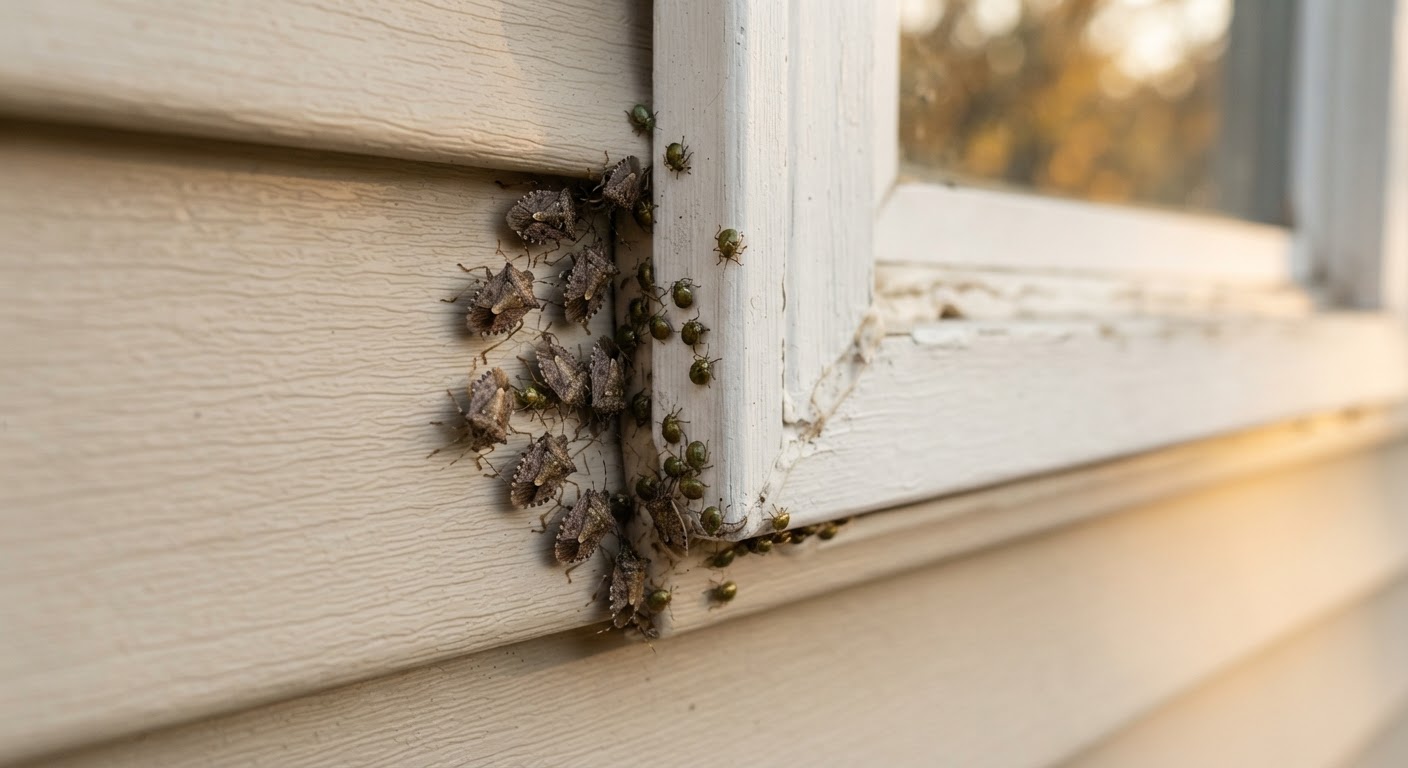
As late September gives way to October and November in Central Alabama, homeowners often notice an abrupt shift on their home’s exterior. Light-colored vinyl, sunny brick walls, and window screens suddenly become covered in hundreds—sometimes thousands—of small, hard-shelled insects. Some are shield-shaped and mottled brown, while others are tiny, squarish, olive-green bugs gathered in tight clusters along trim and gutters.
These insects are primarily brown marmorated stink bugs and kudzu bugs. While they spend the spring and summer quietly feeding in fields, woods, and roadside thickets, autumn triggers an instinctive behavior that brings them directly onto human structures. Understanding why they choose your siding and how they behave is the first step in keeping them out of your living space.
Identifying the Invaders: Kudzu Bugs vs. Stink Bugs
Although both species belong to the order Hemiptera (true bugs) and both produce an unpleasant defensive odor when disturbed, they have distinct appearances and habits.
Kudzu Bugs (Megacopta cribraria)
First detected in Georgia in 2009, kudzu bugs rapidly spread throughout the Southeast, thriving in Alabama due to our endless supply of their preferred host plant: kudzu. They also feed heavily on soybeans and other legumes.
- Appearance: Kudzu bugs are roughly the size of a ladybug (about a quarter-inch long), but with a distinctive square, blocky rear end. They are olive-green with brown speckles.
- Behavior: They tend to mass in very high numbers. When autumn arrives and kudzu begins to dry down or drop foliage, these bugs leave the vine patches in droves to seek winter refuge.
Brown Marmorated Stink Bugs (Halyomorpha halys)
An invasive species that has become widespread across North America, the brown marmorated stink bug is a significant agricultural pest and an aggressive structural invader.
- Appearance: Measuring nearly three-quarters of an inch, stink bugs have a characteristic shield-shaped body. They are mottled brown and gray, with alternating light and dark bands on their antennae and along the edges of their abdomen.
- Behavior: They are strong fliers and feed on a wide variety of fruit, ornamental trees, and vegetables before seeking sheltered winter harborages.
The Science Behind the Swarm: Solar Heat and Aggregation
Homeowners often wonder why these bugs ignore nearby trees and land directly on their houses. The invasion is driven by two main factors: thermal attraction and aggregation pheromones.
As ectothermic (cold-blooded) animals, insects cannot regulate their own body temperature. When nights drop into the 40s and 50s while daytime temperatures remain mild, adult bugs must find a warm place to rest. Houses absorb and radiate solar energy throughout the day. West- and south-facing exterior walls—particularly those painted white, beige, or yellow—reflect light and stay warm long into the evening. Kudzu bugs and stink bugs are naturally drawn to these warm, bright surfaces.
Once a few pioneer bugs settle on the siding, they release chemical signals called aggregation pheromones. These scents travel on the wind, notifying other insects in the area that a safe, warm site has been located. Within days, a handful of resting bugs can turn into a massive cluster covering eaves, soffits, and window casings.
The Real Nuisance: Odors, Stains, and Accidental Invasions
Neither kudzu bugs nor stink bugs reproduce indoors, bite people, or consume building materials like wood or drywall. However, they create serious headaches for homeowners once they arrive at the perimeter:
- Defensive Chemicals: When threatened or crushed, both species emit pungent chemical secretions. Kudzu bugs produce an odor often described as sickly-sweet, pungent, or chemical-like, while stink bugs produce a distinct cilantro-meets-scorched-plastic scent.
- Staining: The secretions released by these bugs can leave stubborn orange, yellow, or dark brown stains on painted trim, vinyl siding, curtains, and light-colored upholstery.
- Indoor Migration: While resting on the siding, bugs explore gaps around window screens, weep holes, utility penetrations, and soffits. As exterior temperatures continue to drop, they work their way into wall voids and attics to enter diapause (a dormant winter state). On warm winter afternoons, the warmth of the home tricks them into waking up, leading them out into living rooms, bedrooms, and light fixtures.
How to Address Clustering Bugs on Your Home
Managing an autumn influx of kudzu bugs and stink bugs requires a combination of smart physical tactics and well-timed perimeter defense.
What Not to Do
Avoid crushing these insects against your siding or walls, as this immediately triggers the release of staining fluids and strong odors. Sweeping them aggressively with a stiff broom can also rupture their bodies. Additionally, avoid vacuuming large numbers with a standard home vacuum cleaner; the exhaust will spread the offensive odor throughout your home, and the smell can permanently linger in the machine.
Physical Exclusion
The most reliable long-term protection against interior invasions is sealing the exterior envelope of your home before the peak autumn migration:
- Inspect and replace torn window screens and damaged weatherstripping around doors.
- Caulk openings around exterior light fixtures, pipe penetrations, and dryer vents.
- Ensure attic gable vents and ridge vents have intact, fine-gauge insect screening.
- Install proper mesh covers over brick weep holes to allow airflow while keeping crawling insects out.
Exterior Barrier Treatments
Once thousands of bugs are active in your neighborhood, physical exclusion alone may not stop them from coating your porch and exterior walls. A targeted residual barrier applied by a pest professional to eaves, window perimeters, siding transitions, and foundation edges can significantly reduce the number of bugs that land, congregate, and survive long enough to penetrate structural gaps. Timing is critical: treatments are most effective when applied in late summer or early fall, just as the insects begin their seasonal flight toward buildings.
Protecting Your Birmingham Home This Season
While kudzu bugs and stink bugs are seasonal visitors, their sheer volume and persistent odors make them one of the most frustrating aspects of an Alabama autumn. Proactive maintenance and timely exterior treatments can keep your siding clean and prevent these overwintering pests from sharing your living spaces during the colder months ahead.
If clustering insects are gathering along your siding, eaves, or windows, contact Alder Crest Pest Control today to schedule a thorough exterior inspection and discuss targeted seasonal barrier treatments for your Birmingham home.
Need help from Alder Crest Pest Control?
Contact our team to discuss your service needs in Birmingham and surrounding service areas.