Termite Bonds in Alabama: What They Cover and Why Every Homeowner Needs One
Termite damage is excluded from standard homeowner insurance policies. Learn how termite bonds work in Alabama, what they cover, and why protecting your property with an ongoing agreement is essential.
Understanding Termite Bonds in Alabama
For Alabama homeowners, termites are not an abstract concern or an occasional nuisance; they are a continuous threat to the structural integrity of residential properties. Because of the region's warm climate, high humidity, and long summers, subterranean termites thrive in native soil throughout the state. To safeguard their investment, many homeowners secure what is commonly known as a termite bond.
A termite bond is a formal service agreement between a property owner and a licensed pest control company. Functioning much like a specialized warranty and maintenance plan, the agreement ensures that your property receives regular professional monitoring and, if termites are detected, appropriate treatments according to the terms of your contract. Understanding how these agreements work, what they cover, and where their boundaries lie is critical for every homeowner in the Birmingham area.
Why Alabama Homes Face Exceptional Termite Pressure
The United States is divided into several termite risk zones, with Alabama situated squarely in the highest category: Zone 1, representing very heavy termite infestation probability. The conditions in central Alabama are ideal for termite colonies:
- Abundant Moisture: Generous annual rainfall and persistent summer humidity create damp soil environments where subterranean termites flourish.
- Temperate Winters: Mild winter temperatures rarely stay cold enough to suppress subterranean activity for extended periods. Termites can stay active deep underground or directly inside heated structures year-round.
- Dense Forested Landscapes: Birmingham's lush tree canopy and native woodlands mean that subterranean termite colonies are naturally established in the soil surrounding residential neighborhoods.
Subterranean termites, including native eastern subterranean species and invasive Formosan termites, work silently behind finished drywall, inside subflooring, and within crawl spaces. Because they consume cellulose from the inside out, extensive structural damage often occurs before visible warning signs ever appear on surface finishes.
The Insurance Gap: Why Standard Policies Leave You Vulnerable
One of the most common misconceptions among new homeowners is that their standard hazard or homeowner insurance policy covers termite damage. In reality, virtually all homeowner insurance policies specifically exclude insect and vermin damage from their coverage terms.
Insurance carriers view termite activity not as a sudden, accidental event like a fire or a burst pipe, but as a preventable maintenance issue. Consequently, if an active infestation hollows out floor joists, support beams, or wall studs, the entire cost of structural repair and cosmetic restoration falls directly on the property owner. A termite bond fills this critical gap by providing a defined framework for treatment, ongoing inspections, and in many cases, financial protection against structural damage.
Types of Termite Bonds: Retreatment vs. Repair
Not all termite agreements provide the same level of coverage. When evaluating an agreement, homeowners generally encounter two main categories of termite bonds: retreatment-only agreements and retreatment with repair agreements.
1. Retreatment-Only Bonds
Under a retreatment bond, the pest control company agrees to re-treat your home at no additional charge if subterranean termites return while the contract remains active. However, this type of agreement does not cover the cost of repairing the wood, drywall, or structural framing damaged by the pests. The homeowner remains responsible for hiring contractors and paying for any necessary carpentry work.
2. Retreatment and Repair Bonds
A retreatment and repair bond provides broader protection. In addition to re-treating the affected areas to eradicate the active colony, the company agrees to cover the cost of repairing new structural damage caused by termites during the active agreement period, up to the monetary limits defined in the contract. Because this option provides a financial safety net for costly structural work, it is widely favored by homeowners and prospective property buyers.
Key Components of a Standard Termite Agreement
While specific terms vary between providers, a comprehensive termite bond typically includes several core elements:
- Initial Treatment or Inspection: Before establishing a bond, a technician conducts a thorough evaluation of the structure and applies an initial protective barrier or bait system around the foundation.
- Annual Comprehensive Inspections: A licensed technician inspects the crawl space, foundation perimeter, and susceptible interior areas once a year to verify that barrier protections remain intact and that no hidden colonies have bypassed the defenses.
- Scheduled Re-Treatments: If bait stations require replenishment or liquid soil barriers reach the end of their operational lifespan, scheduled service maintains the protective envelope around the foundation.
- Transferability: Most reputable agreements can be transferred to a new owner when you sell your home, providing an attractive selling point during real estate negotiations.
Common Exclusions Homeowners Should Know
A termite bond is a legal agreement with defined boundaries, not an unconditional guarantee. To keep coverage valid, homeowners must understand common exclusions that can limit or void protection:
- Pre-Existing Damage: A bond does not cover damage that existed prior to the initiation of the contract. Initial inspection reports will document any past termite activity or existing wood decay.
- Moisture and Plumbing Leaks: Chronic plumbing leaks, overflowing gutters, or poor crawl space drainage that create standing water against foundation timbers can void warranty terms if left unaddressed by the homeowner.
- Structural Alterations: Adding a room addition, pouring a new concrete patio, or building a wooden deck directly against the foundation without notifying the pest control provider can compromise the chemical or bait barrier and void coverage for that section.
- Disturbed Soil Barriers: Extensive landscaping, regrading, or laying new utility trenches around the foundation can displace treated soil, creating unmonitored entry points for foraging insects.
The Crucial Role of Annual Inspections
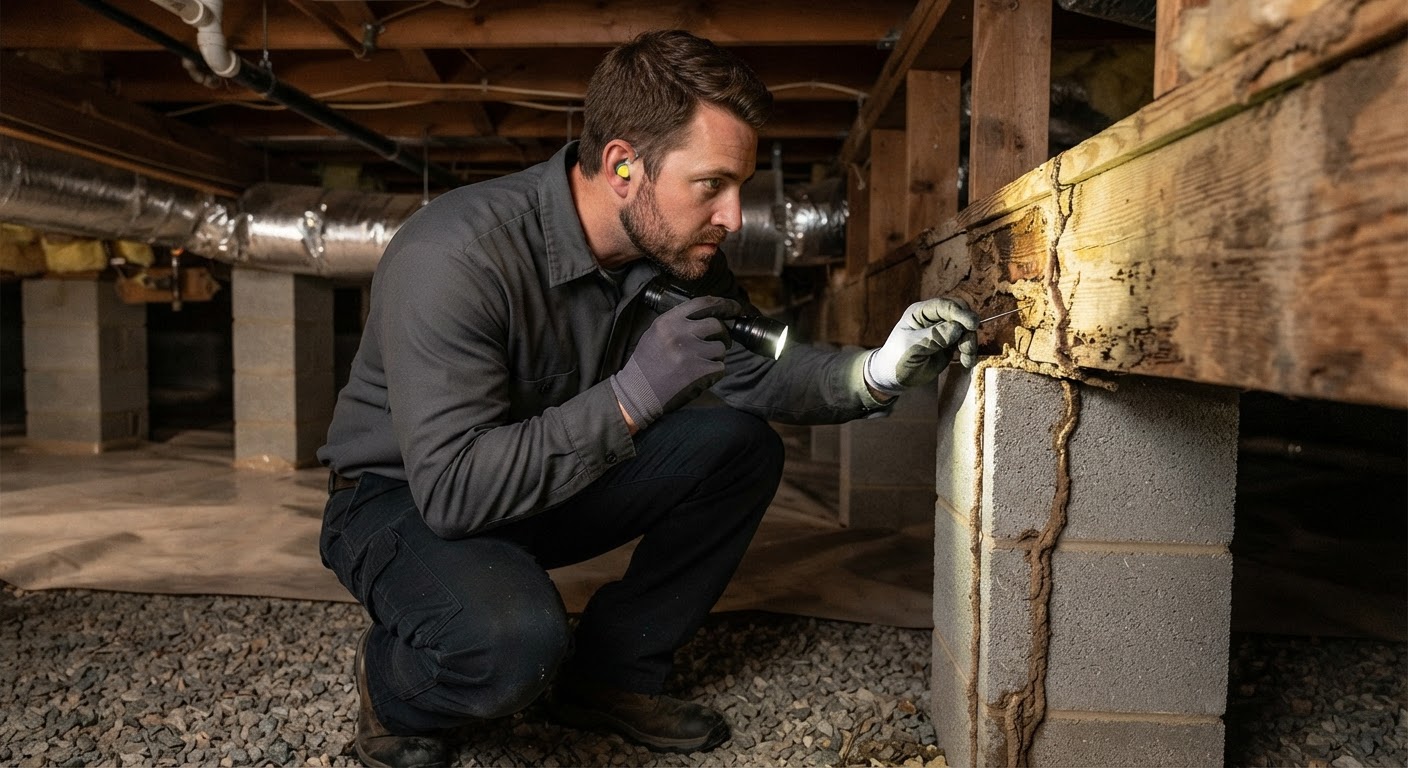
Paying an annual renewal fee without scheduling the required yearly inspection is a frequent mistake. Annual inspections are the operational backbone of any termite bond. During these visits, inspectors look for early warning signs that homeowners routinely miss, including:
- Shelter tubes (mud tubes) running up masonry piers or foundation blocks.
- Micro-cracks in mortar where termites can squeeze through to reach sill plates.
- High moisture readings in subflooring and rim joists.
- Discarded wings from seasonal swarms trapped near crawl space vents or window sills.
Failing to permit or schedule the required annual inspection can cause the service agreement to lapse, leaving the property unprotected and requiring a costly re-inspection or initial treatment to re-establish coverage later.
Value in the Birmingham Real Estate Market
In Alabama, real estate transactions regularly involve a Wood-Destroying Insect Infestation Report (often referred to as an official termite letter). Buyers and lenders want verifiable proof that a home is free of active wood-destroying organisms. Having an active, transferable termite bond simplifies closing, reassures nervous buyers, and protects home value. When purchasing a home, asking for documentation of the existing termite bond is one of the most practical steps a buyer can take.
Protecting Your Birmingham Home
Subterranean termites represent a quiet, persistent threat to every residential structure in central Alabama. Waiting until visible damage appears inside living spaces almost always means facing substantial repairs that standard homeowner insurance will not cover. A structured termite bond combines preventative defense, rigorous annual monitoring, and rapid intervention to keep your investment secure.
Alder Crest Pest Control provides dependable termite control and monitoring solutions tailored to homes throughout the Birmingham area. Contact Alder Crest Pest Control today to schedule a thorough property inspection and protect your home with reliable termite defense.
Need help from Alder Crest Pest Control?
Contact our team to discuss your service needs in Birmingham and surrounding service areas.